We Not All Big Sis and Auntie

Post-pregnancy loss, I had a clearer and more nuanced reflection on why women like Jackie Aina, Oprah, and Ava DuVernay push back when people call them “auntie.” I’m not suggesting that any of them have experienced reproductive loss, but the truth is we never really know what people have been through or what their dreams and hopes have been. They may have wanted to be mothers. They may have wanted the very thing that’s implied when you label someone “auntie.”
This year, someone called me a “rich auntie” when I showed up to an event just a month after having a miscarriage. I knew it was meant as a compliment, but it felt like a reminder: I’m a rich auntie. I’m not a mother. And I think it’s important not to age women beyond where they want to be aged, and not to automatically define them by roles they didn’t choose or don’t identify with.
Because when I talk about “mammifying” women into the role of auntie, I’m talking about the labor that’s expected of us. There’s this unspoken belief that if you’re not raising children, then what are you doing with your life that’s purposeful enough? And if you aren’t a mother, people quickly pivot to placing you into another caregiving role—someone who tends to others, someone whose energy is assumed to be endlessly available. It becomes, “Well, if you’re not a mother, I need to label you as something. I need to give you a caregiving identity.” As if womanhood cannot just exist without being useful to someone.
I recently saw Jackie Aina share that someone told her, “I feel like I’m on FaceTime with my big sis,” and she pushed back. Some people might think that’s unnecessary, but what she was doing was asking to be engaged with in a way that sees her fully. She said, essentially, “That’s not actually the role I occupy.” And it made me think: why couldn’t it just be, “It feels like I’m on the phone with my friend—my sister-friend, my peer—someone my age who’s living life just like me, who has knowledge to share but doesn’t need to be elevated into a role of responsibility or guidance?”
Jackie has talked openly about parentification—being thrust into deep responsibility from an early age, carrying emotional, physical, or financial labor long before you’re ready. And people who have lived like that often want, more than anything, to be known outside of how useful they are. Outside of how much they can carry. They want to be enjoyed, seen, experienced, and to have love, energy, and care reciprocated.
And just because a woman doesn’t have children doesn’t mean she isn’t deserving of that. And it certainly doesn’t mean she needs additional labor assigned to her to make other people more comfortable with her womanhood. When we see women simply living, thriving, enjoying themselves, or offering perspective, we don’t have to automatically turn them into mother figures, aunties, or emotional pack mules. We can let women exist—free, self-defined, and untethered to the traditional ideals placed on womanhood.
We’ve got to think about what we’re saying when we’re saying it, and learn to respect when someone says, “That really doesn’t describe me, but thank you.” Women don’t have to be mothers or mammies or aunties or big sisters to matter. They can simply be.
Enjoyed this post? Get a copy of my latest book and learn how to step into your journey of moving from grief to liberation.
Temptress
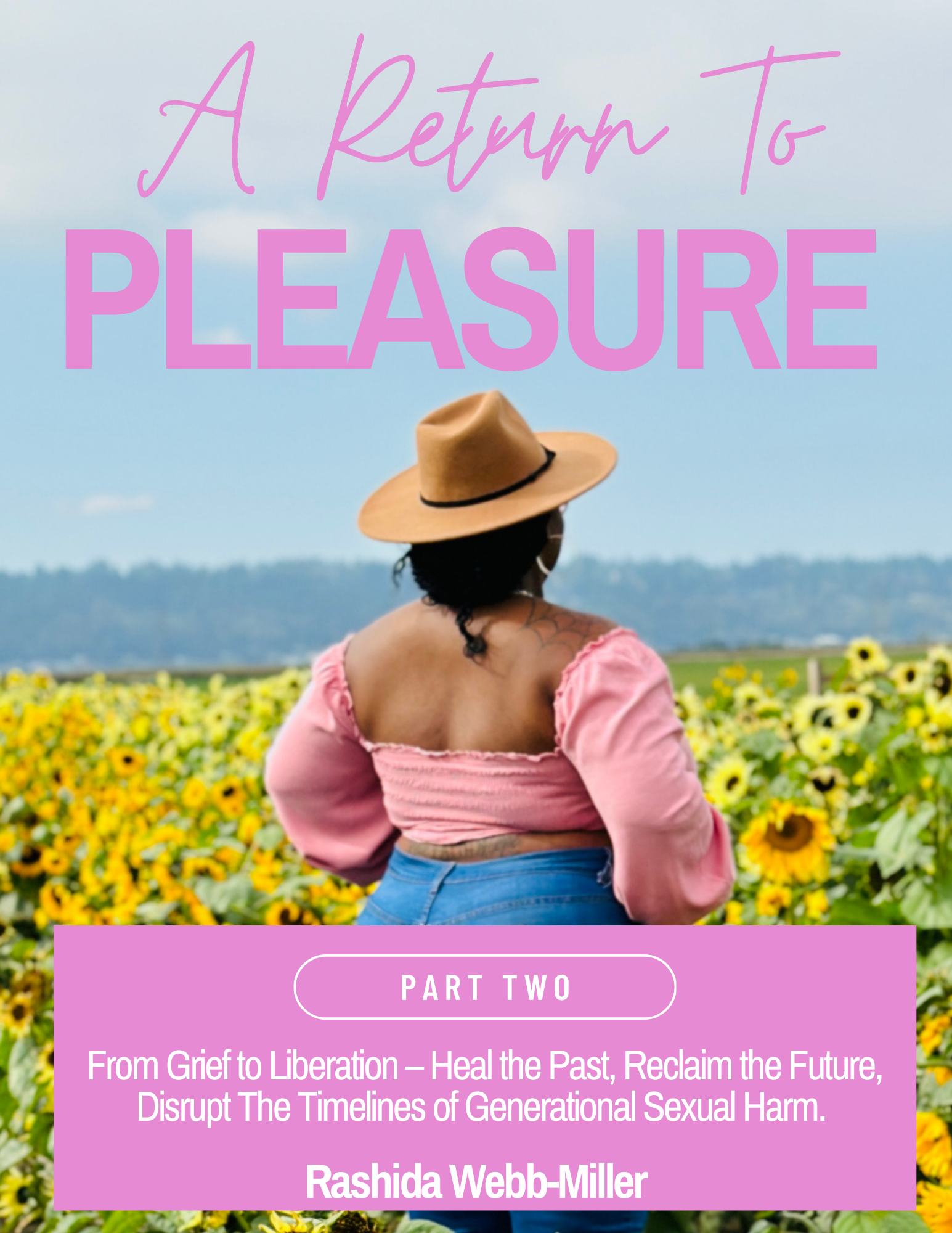
Book now available for order. Please note all books are shipped within 12 business days from date of order.
I am a third-generation sexual assault and domestic violence survivor. When I learned that this was the story woven through my body, my mother’s body, and my mother’s mother’s body, I knew I was being called to examine and address the ways we hold these stories and heal these memories—especially within the body. As a sensual movement practitioner for the last 15+ years, I have been dedicated to helping women and those across the feminine spectrum—regardless of gender, class, or geography—return to their bodies and reclaim the erotic as holy and integral to our aliveness, especially after trauma.
A Return to Pleasure Part 2 is an opportunity for us to explore how our nervous system interprets the world around us and how sexual harm has often been a generational experience among Black women and femmes. This book invites us to reflect on how we begin having these crucial conversations with ourselves and how we can challenge and disrupt the experiences that continue to affect our lives, our families, and the world around us.
In The Messy Movement Lab, my online sexual wellness studio, we focus on sensual movement and somatic embodiment. We encourage our students to embrace the framework that pleasure is our fuel, not a reward. When we allow ourselves to think of pleasure this way, we realize that reaching for pleasure is not a frivolous practice, but a lifesaving one. It reminds the body, nervous system, heart, and spirit that there is more to life than the pain and trauma we've experienced. Through this practice, we give the body the opportunity to witness pleasure for itself, instead of waiting for external circumstances to provide it.
It’s about reclaiming our sexual selves as valuable, beyond someone else’s pleasure or gratification. If we’ve experienced a barrier to pleasure in our bodies due to unprocessed trauma, we must find ways to move through that. This book offers an understanding that Black women and femmes deserve relief, peace, joy, and healing in our sexual experiences. We deserve to inhabit our bodies in ways that allow us to show up fully and unapologetically in the world.
A Return to Pleasure Part 2 also encourages us to create a path forward for those who come after us. It offers a new vision that transcends the harm we see in the culture around us. It provides a secret language for Black women and femmes to weave and mitigate some of the pain and challenges we face, both internally and externally, while fostering resilience and strength.