The Cost of Always Being “On”: Reclaiming The Body Beyond Chronic Performance
When I think about this idea of always being in performance mode—always being “on,” always being ready, always being available, always being game for whatever is being thrown at us—I start to question what we actually lose in that.
Especially when it comes to embracing our sexuality, coming back into the body, and understanding what it means to be in relationship with ourselves.
Because when we’re always “on,” it creates an illusion.
It creates a dynamic where the body begins to feel like it is only for the use of someone else.
Only for entertainment.
Only for presentation.
And in that, we lose something essential.
We lose the ability to track what is actually happening inside of us.
No matter where we are on the emotional spectrum—what we’re feeling, what we’re moving through, what’s happening in our lives and how that is impacting us emotionally and physically—if there is no space to express that, then everything becomes performance.
The way we show up becomes performance.
And that performance doesn’t just live in sexuality or intimacy.
It shows up everywhere.
In our relationships with our partners.
With our children.
With our friends.
With our coworkers.
With our business partners.
We begin to internalize this idea that there is only one way to be accepted.
Only one way to be valuable.
And that way is to ignore what we need.
To override what our body is telling us.
To disconnect from where we actually are in order to be seen as useful.
In order to be seen as worthy.
So when we talk about embracing our sexuality, I don’t think we can only talk about it from one lens.
We have to expand the conversation.
This is where the concept of the sensual spectrum comes in.
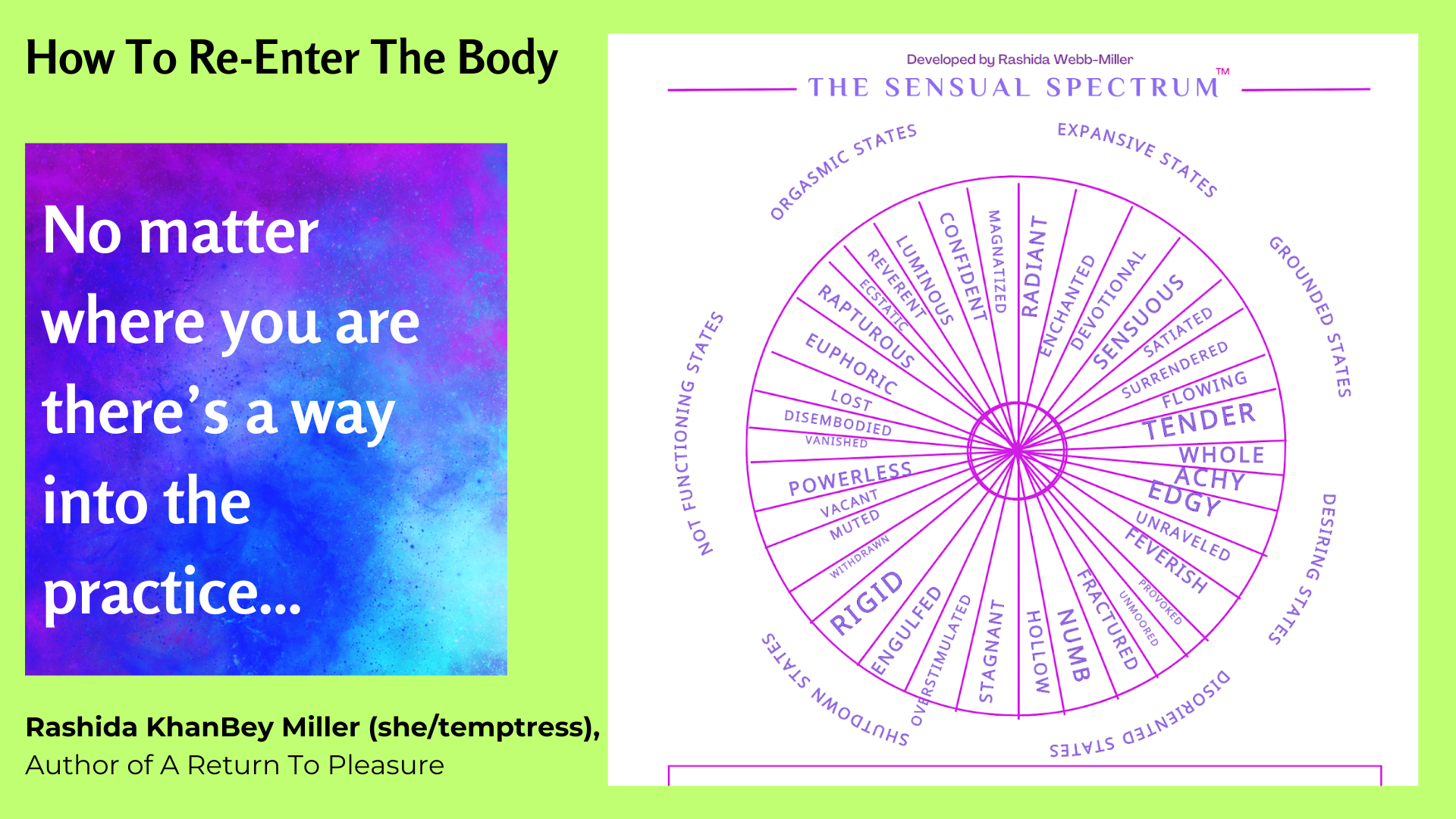
Many different ways to come back home to yourself.
Because sensuality is not just one expression.
It’s not just the polished version.
It’s not just the performance.
It’s not just the moment where everything looks good and feels aligned and we’re fully “on.”
It’s also:
Being tired.
Being in grief.
Being in pain.
Being numb.
Being uncertain.
Being afraid.
Being confused.
And allowing those parts of ourselves to be held as lovable.
To be held as desirable—not in a performative sense, but in the sense that we are still worthy of connection, still worthy of being met, still worthy of being seen as whole.
When we open ourselves up to that, we begin to show up differently in our relationships.
We begin to show up as whole people.
Not just curated versions of ourselves.
And this is where sensual movement practice becomes so important.
Because it gives us a space to sit with the erotic—not only as pleasure, but as a pathway into emotional truth.
A space where we can access what’s underneath the surface.
What hasn’t been expressed.
What hasn’t had language.
A space where emotionality that has been muted or silenced can actually move.
Because in our day-to-day lives, there often isn’t space for that.
There isn’t always capacity to slow down enough to feel what is really there.
But when we create intentional space through the body, through movement, through sensation, we begin to access those deeper layers.
And in doing so, we start to shift our relationship to the body.
The body is no longer something we perform with.
It becomes something we live in.
Something we listen to.
Something we return to.
And from that place, a different kind of connection becomes possible.
One that is not based on performance—but on presence.
This is the work I’ve been sitting with deeply
What does it mean to come out of performance mode And back into your body in a way that feels real Sustainable And honest
If you’ve been feeling that quiet disconnection That subtle exhaustion That sense that something is missing even when everything looks “fine”
I created something for you
A space to slow down To feel again To reconnect with your body beyond performance
Tap the link below to step in...
Join in-person in New York 5/31 or Los Angeles 8/23
or
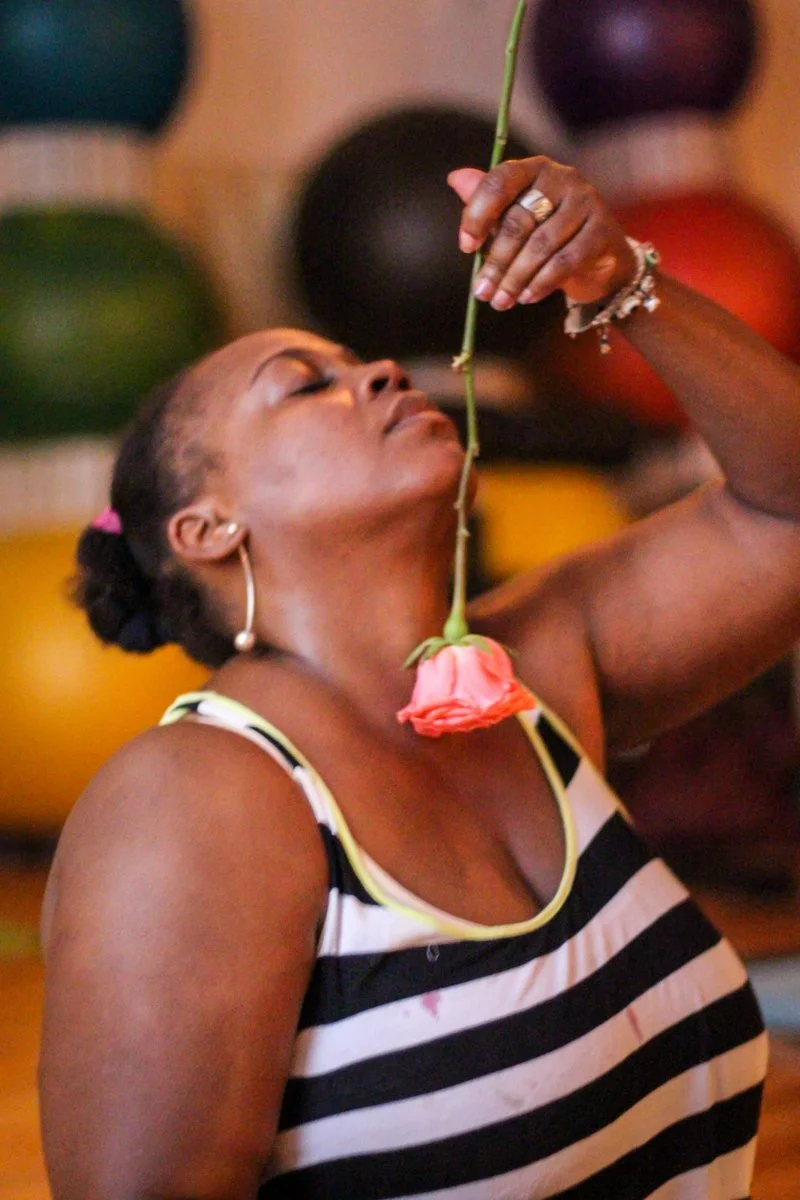
Photo by Sheena LaShay Young, Reclaiming Your Sexy Tour Archives
See you on the dance floor,
Rashida KhanBey Miller (she/temptress)
CEO at The Messy Movement Lab ®
themessymovementlab.com